How a body becomes a sculpture
A practical guide to body casting — materials, process and care — written by sculptor Brooke Meenan, Life Casting Berlin.
What is life casting?
Life casting — also called body casting — means taking a mould directly from the living body and casting it as a three-dimensional object. Unlike a photograph, a cast records the body at a scale of one to one: skin texture, the weight of a hand, the curve of a back.
At Life Casting Berlin the cast is the starting point, not the end: every piece is refined and finished by hand as a sculpture. The studio works exclusively with water-based materials.
How a body cast is made
Consultation
A free 20-minute call about pose, material, finish and timing.
Preparation
The area to be cast is shaved; measurements are taken for the support; a protective cream is applied.
Alginate mould
Skin-safe alginate is applied. It sets within minutes and records every detail.
Support shell
Plaster bandages form a rigid shell that holds the soft mould in shape.
Removing
Shell and mould are lifted off together, gently.
Casting
The mould is filled with plaster or water-based resin; then the alginate is peeled away.
Finishing
Refined, sanded and finished by hand — about three months until the sculpture is ready.
Alginate, explained
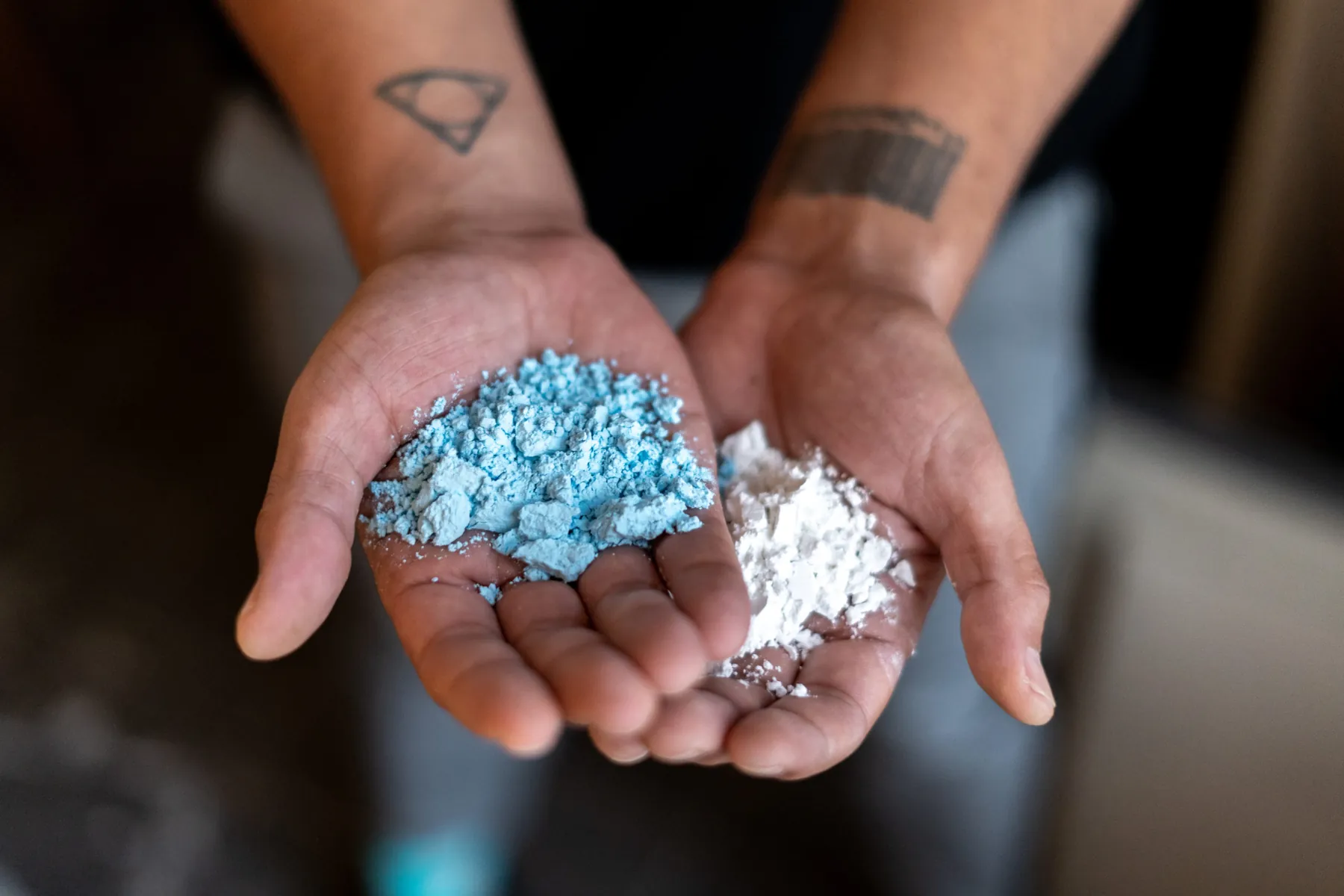
Alginate is a moulding material made from brown seaweed. Mixed with water it becomes a soft paste that sets within a few minutes into a flexible, rubbery layer — related materials are used by dentists for impressions. It is skin-safe, does not pull hair and records fine details such as skin texture.
An alginate mould can only be used once: it slowly loses water and shrinks, so it is filled soon after the session. That is also why editions — several casts from one body — have to be planned before the casting.
Plaster, resin or bronze?
| Material | Look | Character | Good for |
|---|---|---|---|
| Plaster | Matt, white, quiet — almost classical | Detailed, porous, for dry indoor spaces | The classic sculpture; base for pigment and gold leaf |
| Water-based acrylic resin | Mineral surface, can be coloured through | More robust and lighter than plaster | Pieces that are handled or travel; metal effects |
| Bronze | Metallic, warm, with patina | Extremely durable, heavy; made in a foundry | A piece for generations; also outdoors |
Finishes on plaster and resin: mineral pigments, patina, metal effects, gold leaf. White plaster is included in every private session; other materials and finishes are quoted separately.
Choosing a pose
A pose can be simple — a torso seen from the front, hands resting on the body — or tell a story: an embrace, intertwined hands, a gesture that is typical of you. Think about where the sculpture will live: on a wall, a shelf, a plinth. The pose is decided together in the consultation call, so that the support structure can be prepared in advance.
Caring for your sculpture
- PlasterKeep indoors and dry; dust with a soft, dry brush; no water
- ResinMore robust; wipe gently with a slightly damp cloth
- Gold leaf & pigmentDo not rub; avoid touching the surface often
- BronzeIndoors or outdoors; the patina develops over time
Words you’ll hear in the studio
- Life casting
- Taking a mould directly from the living body and casting it as a three-dimensional object.
- Alginate
- A skin-safe, water-based moulding material made from seaweed that sets within minutes.
- Mould
- The negative form taken from the body, into which the cast is poured.
- Support shell
- A rigid layer of plaster bandages that holds a soft alginate mould in shape.
- Positive
- The finished cast — the form of the body, made by filling the mould.
- Water-based acrylic resin
- A mineral casting material bound with a water-based acrylic dispersion; more robust and lighter than plaster.
- Patina
- A surface colouring that gives a cast depth or an aged, metallic or mineral look.
- Gilding
- Applying thin gold leaf to a surface by hand.
- Edition
- Several casts made from one mould, planned before the casting.
- Lost-wax casting
- The foundry process used to turn a cast into bronze.
Questions left?
Ask me in a free 20-minute call — or read the questions & answers.